Wild Orca in Wellington Harbour
On Friday 16 January, reports started circulating of orca moving through Wellington Harbour. By early evening, Jacinta (my wife) and I were in the car, tracing the coastline and scanning the water, hoping to catch a glimpse.
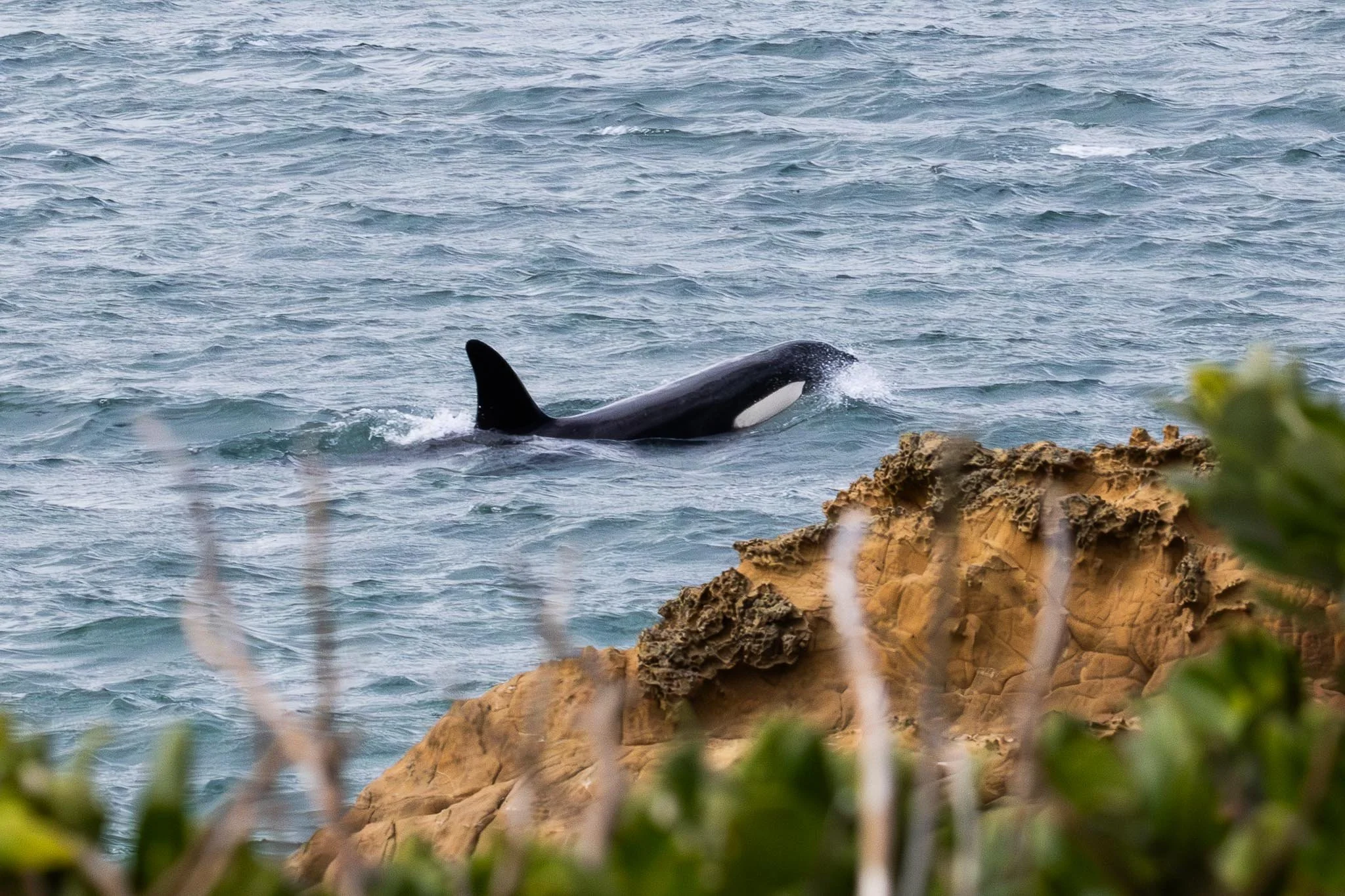
We drove almost the entire length of the Miramar Peninsula without success, eventually looping back toward Evans Bay. As the evening settled in, that’s where we finally saw them. Black dorsal fins breaking the surface, moving close to shore.
It quickly became clear we were watching Pickle and Funky Monkey’s pod.
New Zealand orca are a resident population, meaning they live in long-term family groups rather than passing briefly through. Individuals are often identified by their dorsal fins and markings, which is how we can identify Pickle and Funky Monkey.
Funky Monkey is recognisable by his tall, slightly wavy dorsal fin. Pickle, on the other hand, has a shorter dorsal fin, roughly half the height you’d expect. The cause isn’t known, but it’s a feature that makes her easy to spot once you know what you’re looking for.
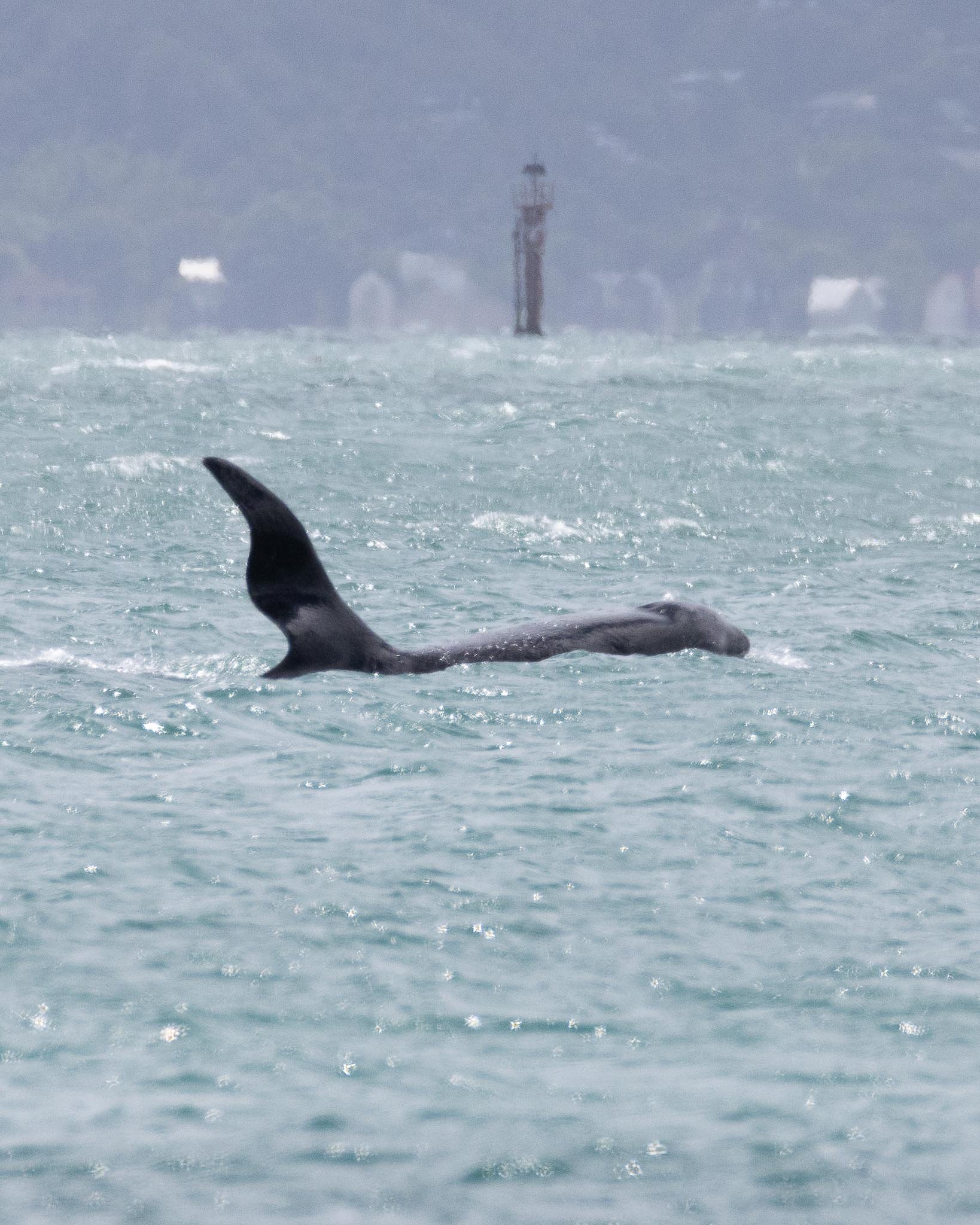
Funky Monkey and his wavey dorsal fin.
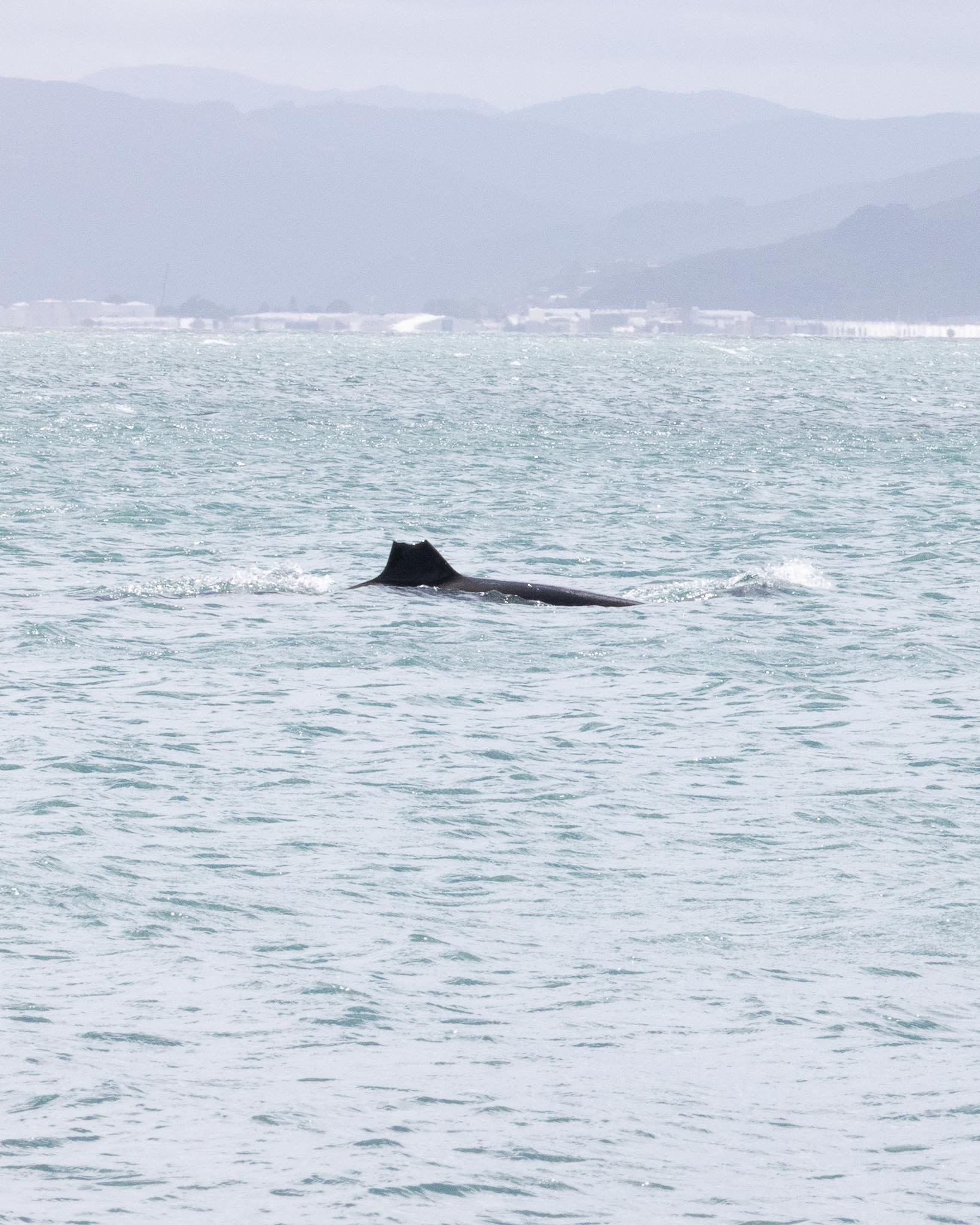
Pickle and her half dorsal fin.
From Evans Bay, we followed the pod’s movement along the shoreline toward Point Halswell. As word spread, more people gathered at vantage points around the harbour. The orca moved steadily, surfacing and diving as they hunted close to shore.
In New Zealand waters, orca are known to prey on stingrays and eagle rays in particular, as well as sharks, fish, and occasionally other marine species. Wellington Harbour, with its shallow areas and tidal flow, can become an ideal hunting ground. Watching them work the water so close to the city was a powerful reminder that this harbour isn’t just scenic, it’s very much alive.
As they hunted near Point Halswell, there were kayakers and other water users nearby, which naturally draws attention to how important respectful wildlife viewing is. The Department of Conservation has clear guidelines around marine mammals: keep your distance, don’t approach or follow, and allow animals to move freely without disruption. Observing from shore remains the safest and least intrusive way to experience moments like this.
As the light faded, the pod continued on and eventually disappeared from view. We left that evening hopeful, but unsure if we’d see them again.
The next day, Saturday, brought a very different energy. Social media reports had spread overnight, and by the time I headed out solo, there were far more people around. The harbour felt busy, charged with excitement, everyone hoping for another glimpse.
Picking up almost exactly where we’d last seen them at Point Halswell, the orca reappeared. Once again, Pickle and Funky Monkey were easy to identify, moving with the pod toward Seatoun. This time, the mood was electric. People were pointing, sharing information, and watching intently as the pod continued along the coastline before eventually heading toward Eastbourne.
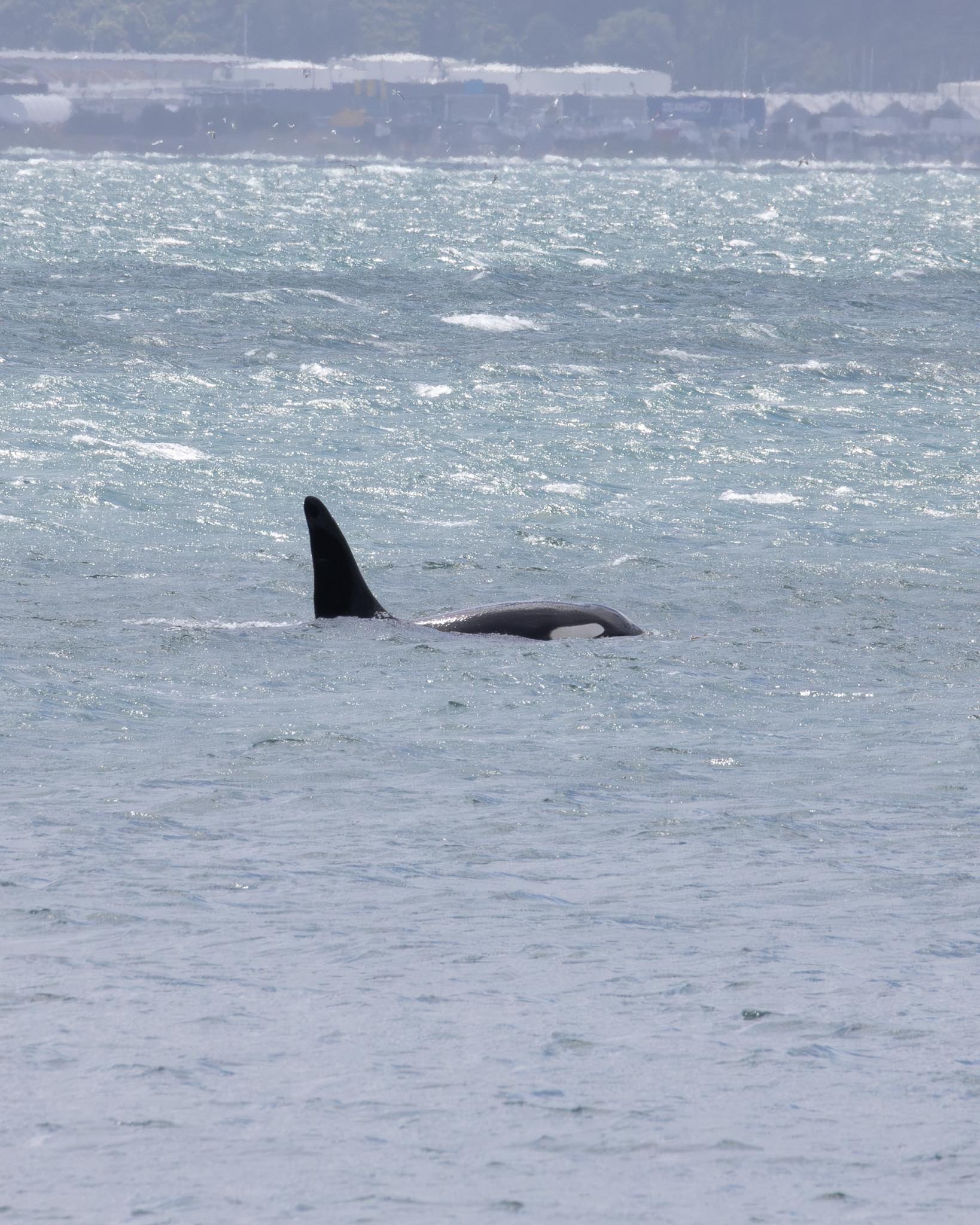
They saw through Kau Bay.
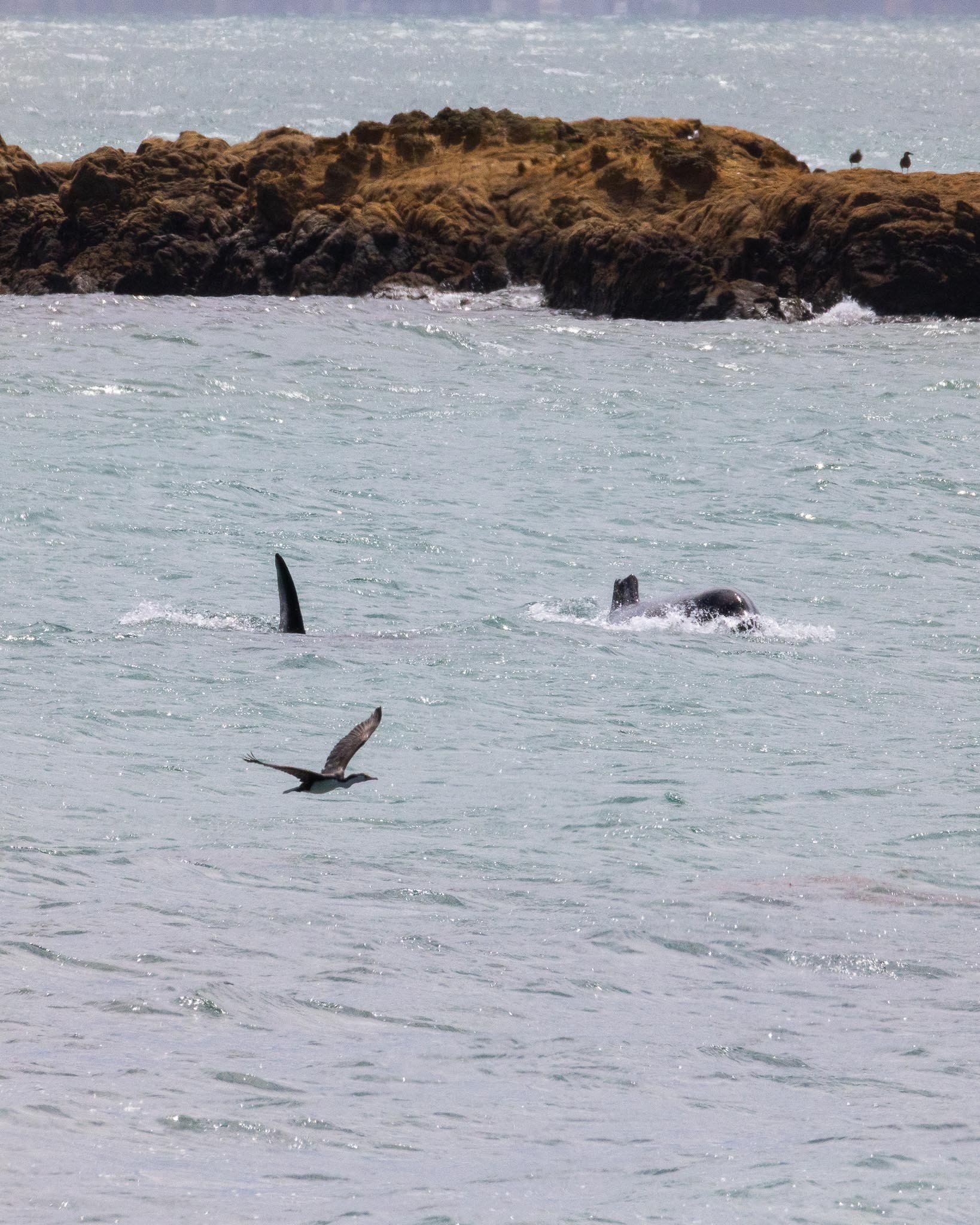
Then Karaka Bay.
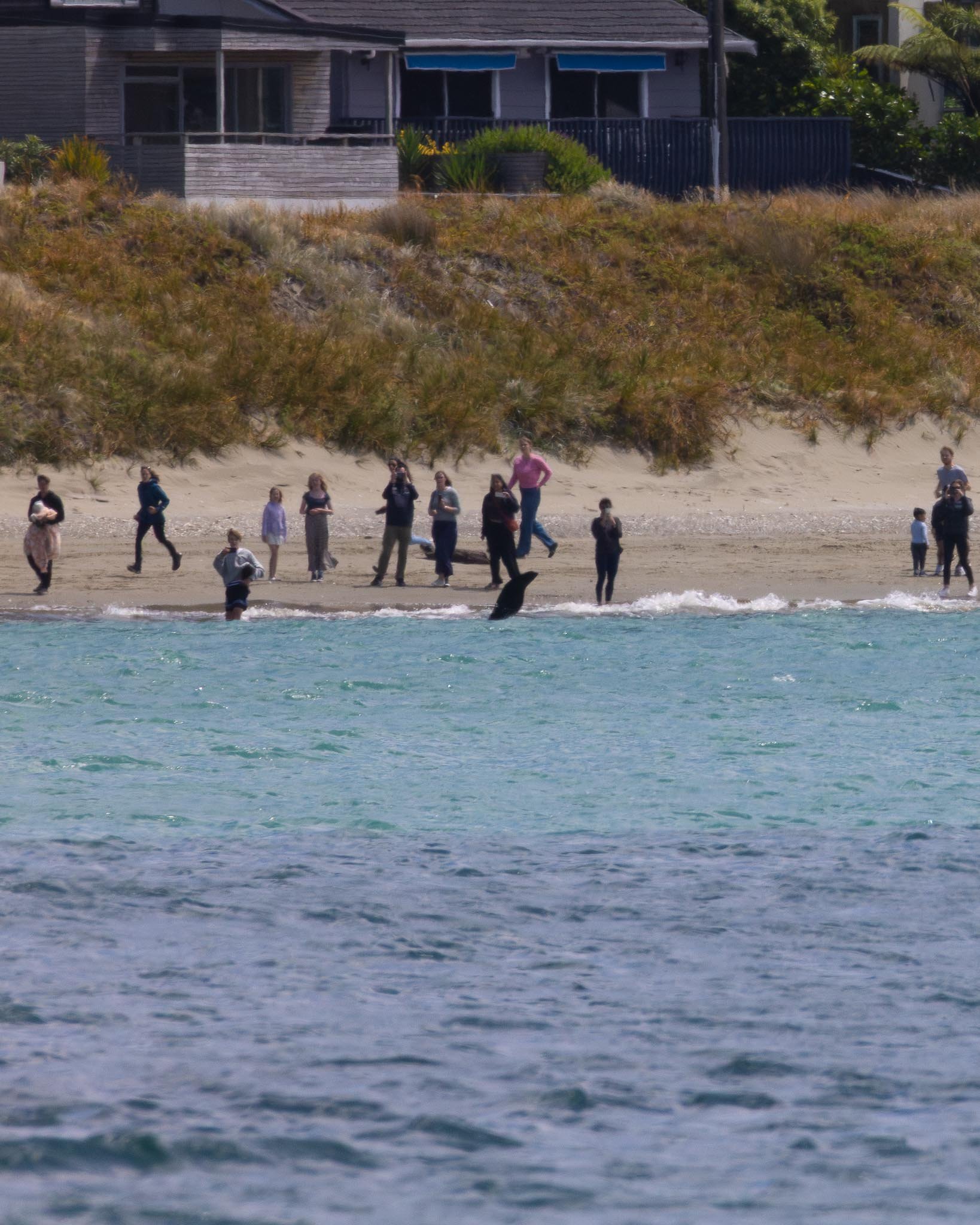
Before going really shallow at Worser Bay.
Following them that second day felt less quiet and more communal. A shared moment as hundreds of people experienced the same sense of awe together.
Seeing orca in Wellington is never guaranteed, and that’s part of what makes it special. Over two days, we were lucky enough to witness them twice. They moved through familiar waters in a way that felt completely natural to them and extraordinary to us.
Moments like this are a big part of what makes Wellington such a special place to live - wildlife turns up right on the edge of the city if you’re paying attention.
If experiences like this matter to you, consider supporting organisations like Project Jonah, who work year-round to protect marine mammals in Aotearoa through rescue, education, and conservation. These encounters are a privilege, and helping to protect them ensures they’ll still be here for future generations to experience.